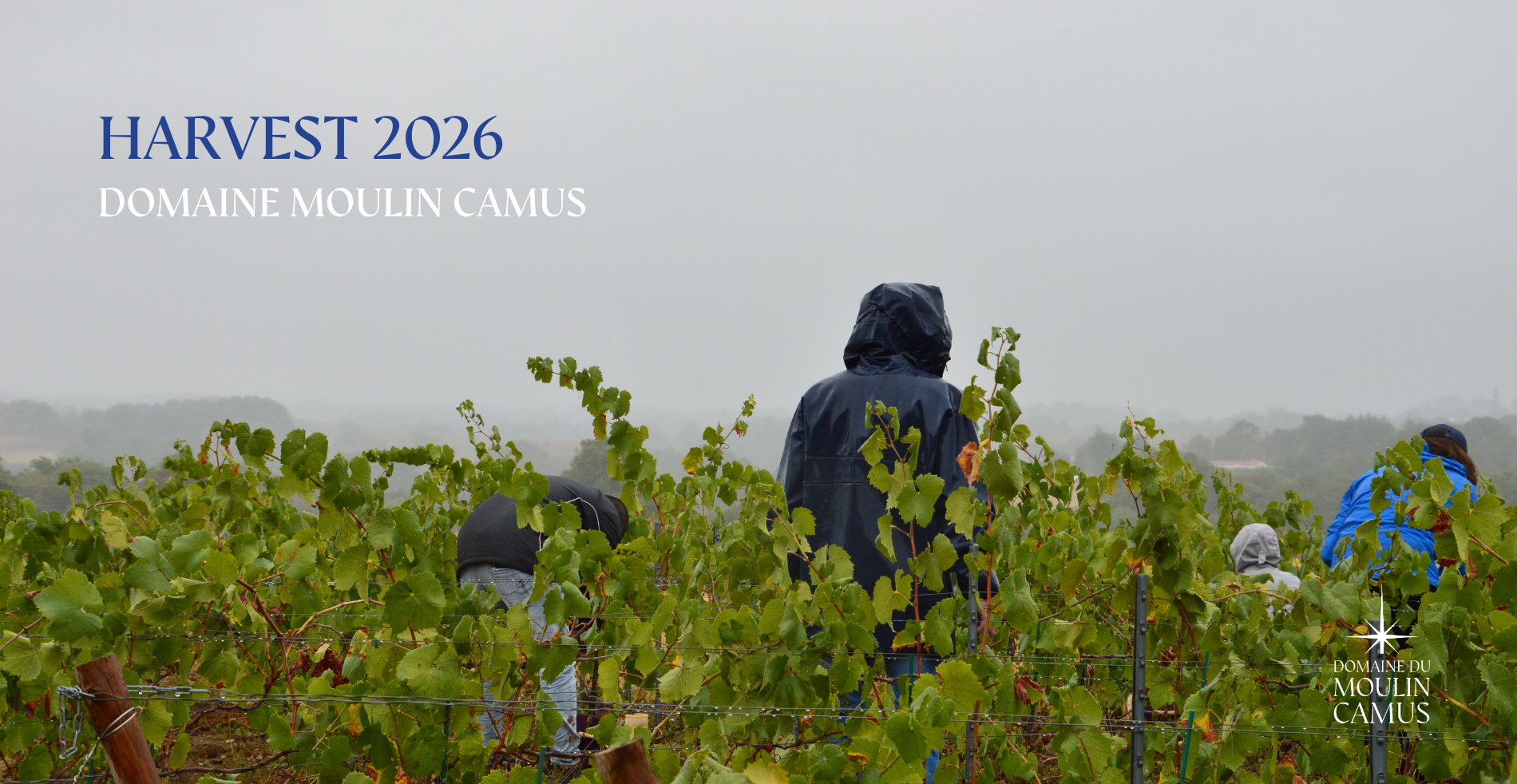
As September comes to a close, it marks the end of a pivotal period for Domaine Moulin Camus: the 2026 harvest. Once again this year, the work in the vineyard and the cellar called for rigor, responsiveness, and expertise. While summer weather conditions did not work in our favor, the sanitary quality of the grapes offers a highly promising vintage. Here is a look back at the key stages of this harvest, from maturity monitoring to precision work in the cellar.
Pre-Harvest: preparing the vineyard and cellar
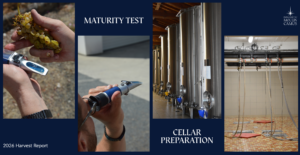
Maturity control: where fieldwork meets science
The decision to launch the harvest is never left to chance. To identify the ideal timing window, we systematically combine two approaches:
- Field analysis: We taste the berries directly in the rows to evaluate aromatic maturity and seed structure.
- Laboratory monitoring: A sample of 200 berries is routinely collected to measure sugar content, acidity, and pH levels.
This double check ensures that each plot is harvested at its optimal point of balance.
Cellar preparation: rigorous hygiene standards
In the days leading up to the harvest, the cellar undergoes meticulous preparation. The receiving hopper, pneumatic press, piping, and all tanks are thoroughly washed and sanitized. This strict hygiene is essential to preserve the purity of the musts and the distinctive character of our future wines
During the harvest: how the harvest unfolded
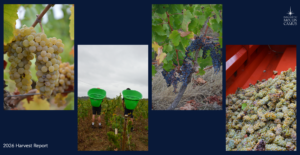
An early harvest under stable weather conditions
The 2026 harvest began as early as August 19th, a particularly early date for the estate. High summer temperatures accelerated grape ripening.
Fortunately, the harvest took place under very favorable weather conditions with no rain. The sparse rainfall in late September had no impact on the red grape varieties. As a result, we brought in healthy, concentrated grapes in impeccable sanitary condition.
From press to fermentation: juice management
Upon arrival at the cellar, the grapes (Sauvignon, Chardonnay, Melon B., Folle Blanche, Gamay, Merlot, and finally Cabernet Franc) are processed according to well-established procedures:
-
Pneumatic pressing: Gentle extraction to preserve the fruit’s freshness.
-
Settling (Débourbage): Juice clarification through sedimentation to isolate heavy lees before winemaking.
-
Fermentation: Precise temperature control to guide the transformation of sugars.
Post-harvest: aging in the cellar and vineyard care
Cellar monitoring: shaping the vintage
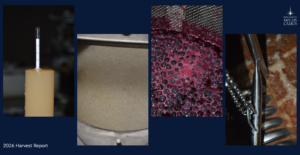
Harvesting concluded on September 8th, and alcoholic fermentations are now complete. The team’s focus has shifted to aging:
- Initial racking: Separating the wine from the gross lees to refine its structure.
- Aging on lees: Tanks are completely filled to prevent any contact with air. This aging process develops mouthfeel, roundness, and complexity.
- Blending: The next key step to define the final profile of our various cuvées.
Autumn vineyard care: soil preparation
While the wines age quietly in the cellar, work resumes in the vineyard to prepare the vines for winter:
- Un-trellising: Lowering the wires to release the foliage.
- Basal fertilizing: Applying organic compost to nourish and restructure the soil.
- Soil tillage: Mechanical aeration between the rows.
In summary, the 2026 vintage at Domaine Moulin Camus is marked by an exceptionally early harvest, balanced by promising berry quality. Our cuvées are now safely settled in the cellar for their aging phase. We look forward to presenting them to you during our upcoming tastings and trade events.